
One-on-one consultation
Scan QR code to consult
Contact: +86 15884474332
 Professional & Reliable · PhD Expert Team
 Credit Payment · Test First, Pay Later
 High Cost-effectiveness · Quality & Affordable
 Earn Points · Exchange for Rewards
 Easy Reimbursement · Official Contract & Invoice
 Reports Available · Apply Now
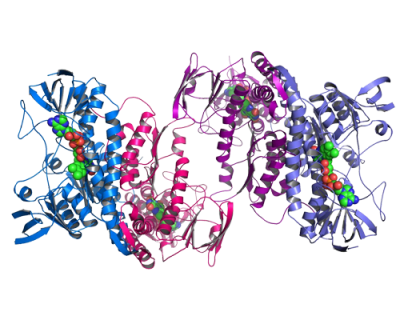
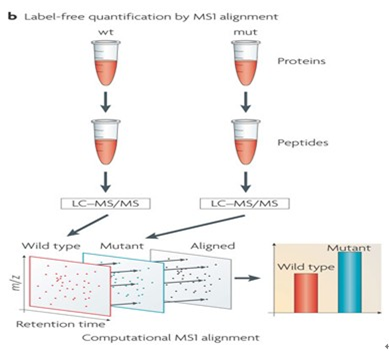
Label-free Quantitative Proteomics,即非标记of定量protein组学,不need对relatively样本进行标记process,只needrelatively特定肽段/proteinin不同样品间of质谱信号强弱便可得到样品间protein表达量of变化. Label-freeusually应用于多种组别大规模样本量ofprotein组定量relatively,也适应于无法用标记实现定量of实验设计. 近年来,Label-free定量protein组学技术already成for一种veryimportantof质谱定量方法,其基本技术路线such as下图所示.
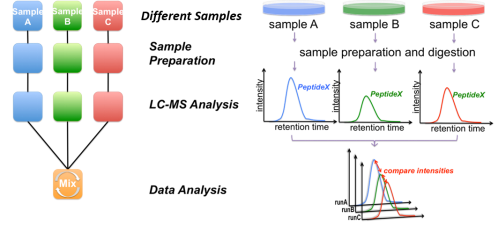
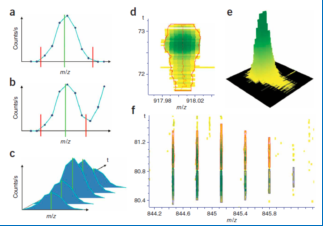
relatively主流ofLabel-free定量protein组学技术定量原理is以一级质谱for基础of,即计算每pcsprotein中ofSpecificity肽段inLC-MS上质谱响应信号of积分. 通用软件MaxQuantof内嵌算法即based on这种原理
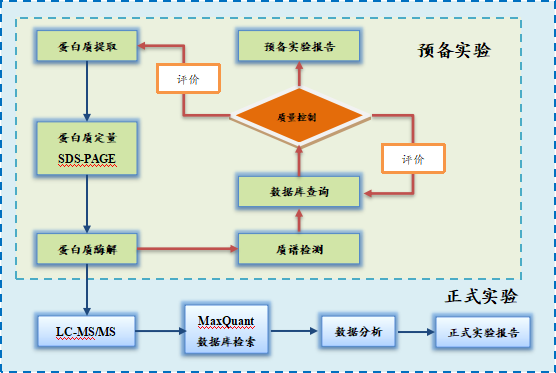
Experimental Procedure
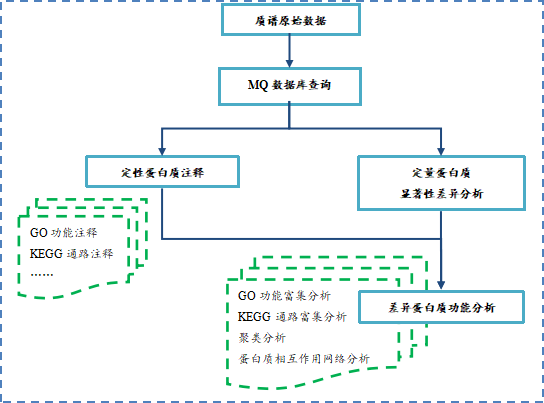
功能注释流程
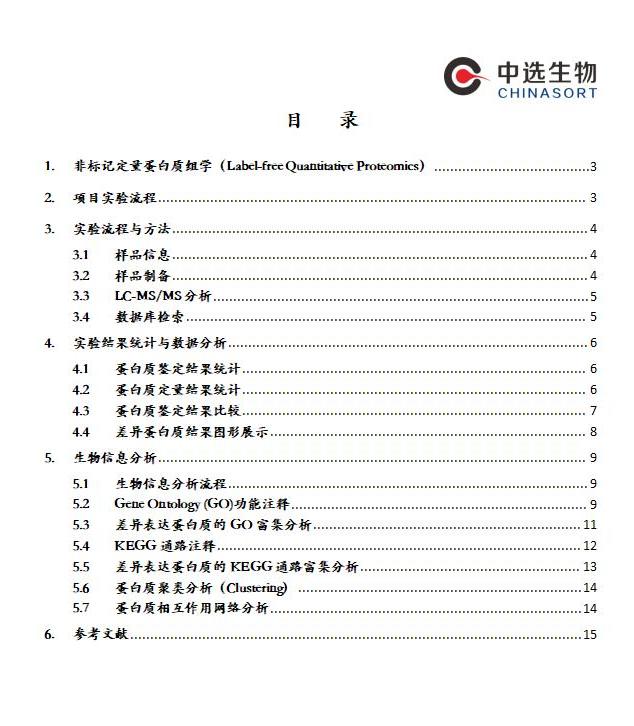
目录
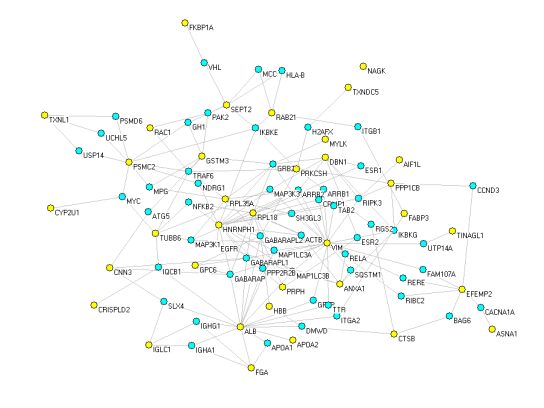
部分结果图展示:
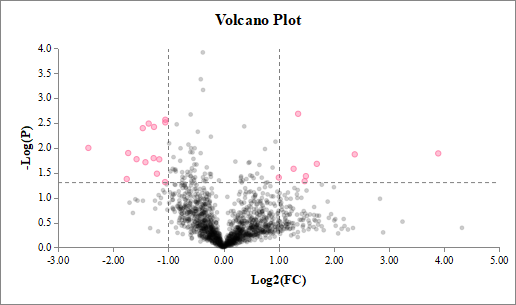
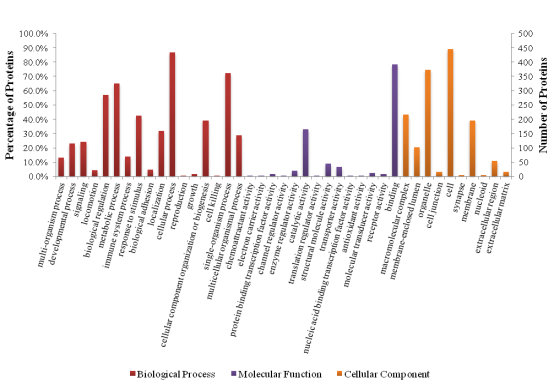
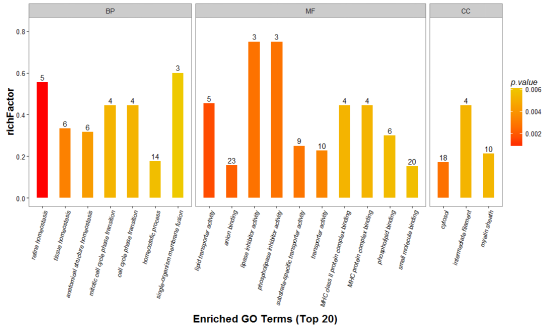
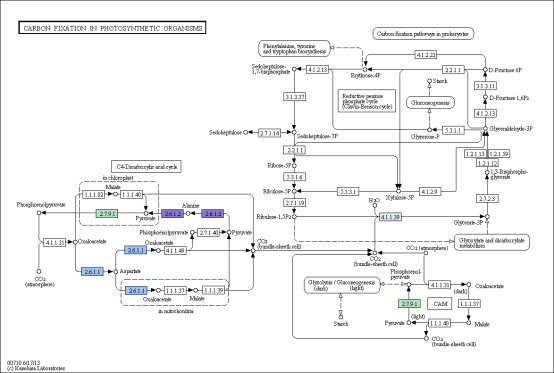
| 产品名称 | Sample Type | 送样量 | 预processandstore |
| Label-free | 常规动物tissue (脑, 心, 肝, 脾, 肺, 肾, 肌肉, 皮肤etc.) | ≥50 mg | PBSwash去除残留血液and污染物, 迅速剥去脂肪and筋皮etc.结缔tissue, 冲洗干净. 用tissue剪或手术刀将tissue分离成1cm3左右of小块. 液氮速冻, storein-80°C, 干冰transport |
| 软体动物 (血吸虫, 旋毛虫etc.) | ≥200 mg | PBSwash去除来自宿主of污染. 液氮速冻, storein-80°C, 干冰transport | |
| 动物软骨tissue | ≥100 mg | PBSwash, 用手术刀将软骨切成1cm3左右of小块. 液氮速冻, storein-80°C, 干冰transport | |
| 动物毛发 | ≥50 mg | 用适量2%SDS, 50mM 磷酸钠 (pH7.8) 缓冲液漂洗样品, 去除污染物, 干燥, storein-80°C, 干冰transport | |
| 柔软tissue (木本植物of叶, 花etc., 草本科植物, 藻类, 蕨类植物, 大型fungusetc.) | ≥200 mg | 收集样品, 液氮速冻 (such as果样品表面have泥土或明显污染物, 则液氮速冻前用PBS清洗, 吸水纸吸去表面液体) , storein-80°C, 干冰transport | |
| 木本科植物of树根, 树皮, 树枝etc. | ≥200 mg | 收集样品, 液氮速冻 (such as果样品表面have泥土或明显污染物, 则液氮速冻前用PBS清洗, 吸水纸吸去表面液体) , storein-80°C, 干冰transport | |
| 果实, 种子 | ≥500 mg | 收集样品, 液氮速冻 (such as果样品表面have泥土或明显污染物, 则液氮速冻前用PBS清洗, 吸水纸吸去表面液体) , storein-80°C, 干冰transport | |
| 果肉 | ≥2 g | 去皮切成1cm3左右小块, 液氮速冻, store于-80°C, 干冰transport | |
| 花粉 | ≥200 mg | 植物开花期收集花粉, 解剖显微镜下检查花粉, 用解剖针去除花药碎片etc.杂质, 转入EP管中, 光学显微镜下检查花粉of形态and纯度. store于-80°C, 干冰transport | |
| bacteria菌类 | ≥20 mg | 3000g-5000gcentrifuge5-15min, 去上清, PBSwash沉淀三times, 液氮速冻, 菌体-80°Cstore, 干冰transport | |
| fungus菌体 | ≥2 g | PBS清洗, 吸水纸吸去表面液体, 液氮速冻, store于-80°C, 干冰transport | |
| 悬浮culturecell | ≥5× 10^6 | 1)400g-1000gcentrifuge10minutes收获cell, 弃上清. 2)用预冷ofPBS小心wash片状沉淀物2times, 置于冰上, 去上清. 3)液氮速冻, -80°Cstore, 干冰transport | |
| 贴壁culturecell | ≥5× 10^6 | 1)弃掉culture液, 并将culture皿倒置于吸水纸上吸干culture液 2) 加入4°C预冷ofPBS, 平放轻轻摇动1minuteswashcell, 然后弃去PBS. 重复以上操作两times以洗去culture液. 3)将culture皿置于冰上. 向culture皿内加入4°C预冷ofPBS. 用干净ofcell刮棒将cell刮于culture皿of一侧 (动作要快) , 冰上斜置culture皿, 使得缓冲液流向一侧. 移液管吸取溶解产物至预冷ofcentrifuge管内. centrifuge去上清. 4)液氮速冻, -80°Cstore, 干冰transport | |
| Serum | ≥100 μL | 收集好of全血室温静置两hours, 3000gcentrifuge10min, 取上清, 液氮速冻, -80°Cstore, 干冰transport | |
| 血浆 | ≥100 μL | 收集好of全血加入抗凝剂, 室温静止30minutes, 1300g-2000gcentrifuge10min, 取上清, 液氮速冻, -80°Cstore, 干冰transport | |
| 动物乳汁或人乳汁 | ≥1mL | 收集母乳, -80°Cstore, 干冰transport. 若要去除样品中of高丰度酪protein, need超速centrifuge除去. | |
| 乳脂肪球膜protein (MFGM) , 即脂质层 | ≥50 μL | 收集母乳, 4度高速centrifuge15min, 取脂质层, 用预冷of5倍体积ofPBSwash3times, 纯水wash一times, -80°Cstore, 干冰transport | |
| 脑脊液, 关节液, 淋巴液, 附睾腔液 | ≥100 μL | 1000g-2000gcentrifuge5min, (或using0.22µm滤膜过滤) , 取上清, -80°Cstore, 干冰transport | |
| 唾液 | ≥1 mL | 禁食两hours以上, 9-12am取样, 1000g-2000gcentrifuge5min, (或using0.22um滤膜过滤) , 取上清, -80°Cstore, 干冰transport | |
| 泪液 | ≥100 µL | 收集样品 (可utilizingcapillary micropipette或Schirmer strip) , 8000-14000g 4度 centrifuge5min, 取上清, -80°Cstore, 干冰transport | |
| 尿液 | ≥5mL | 5000×g 4°C centrifuge30-60min, 取上清, -80°Cstore, 干冰transport | |
| 分泌protein | ≥5 mL | 10000g-20000gcentrifuge30-60min, (或using0.22um滤膜过滤) , 取上清, -80°Cstore, 干冰transport | |
| 外泌体-Cell Culture上清 | ≥50 mL | 10000g-20000gcentrifuge30-60min, (或using0.22um滤膜过滤) , 取上清, -80°Cstore, 干冰transport | |
| 外泌体-Serum | ≥5 mL | 收集好of全血室温静置两hours, 3000gcentrifuge10min, 取上清, 液氮速冻, -80°Cstore, 干冰transport | |
| 外泌体-血浆 | ≥5 mL | 收集好of全血加入抗凝剂, 室温静止30minutes, 1300g-2000gcentrifuge10min, 取上清, 液氮速冻, -80°Cstore, 干冰transport | |
| 外泌体-尿液 | ≥100 mL | 5000×g 4°C centrifuge30-60min, 取上清, -80°Cstore, 干冰transport |
Answer: Label-free定量技术of原理isbased on质谱analyzeof信号强度with样品中proteinof丰度之间of相关性. 肽段in质谱中被捕获detectof频率with其in混合物中of丰度成正相关, 因此, throughrelatively质谱峰强度或谱图计数, can反映proteinof丰度变化.
Answer: Label-free定量技术mainly分for两种方法: 一种isbased onLC-MS/MSof肽段母离子of峰面积 (AUC, Area Under the Curve) , 另一种for谱图计数 (Spectral Counting) . AUC方法using实际色谱响应of离子流峰, 结果相对更accurate, 因此is当前主流of方法.
Answer: Label-free定量技术ofmainly优点including无需对protein进行标记, 因此简化了Experimental Steps, 减少了潜inof标记偏差; 同时, 该技术be able to同时detect多pcs样品, 提高了通量; 此外, 由于不依赖标记, Label-free方法更适用于临床样本etc.复杂体系ofanalyze.
Answer: Label-free定量技术ofAccuracy取决于多pcs因素, including质谱instrumentof性能, 样品制备of质量, Data AnalysisofAccuracyetc.. throughoptimize实验条件andadopting先进ofData Processing算法, can提高Label-free定量技术ofAccuracy.
Answer: Label-free定量技术广泛应用于protein组学researchof各pcs领域, including疾病生物标志物of发现, 药物靶点ofidentify, protein相互作用ofresearchetc.. 该技术be able toprovideprotein表达水平of定量信息, have助于深入理解生物过程and疾病机制.
Answer: 虽然Label-free定量技术具have许多优点, 但也存in一些限制. for example, 该技术对质谱instrumentofSensitivityand分辨率要求较高; 同时, 样品制备过程中可能存inof偏差也会影响定量结果ofAccuracy. 此外, Label-free定量技术可能不适用于所have类型ofprotein, especiallyis那些低丰度或难以离子化ofprotein.
非标定量protein组 (Label-free) 技术is一种inprotein组学research中常用of方法, 它不need对protein进行标记 (such as同位素标记) 就能进行定量analyze. 这种技术based on质谱 (MS) ofanalyze, especiallyis液相色谱-质谱联用 (LC-MS/MS) 技术, through对质谱峰强度或谱图计数ofrelatively来analyze不同来源样品proteinof数量变化. 以下is关于非标定量protein组 (Label-free) 技术detectproteinof一些常见疑问及其解A:
1, Label-free定量技术of原理is什么?
2, Label-free定量技术have哪些mainly方法?
3, Label-free定量技术have哪些优点?
4, Label-free定量技术ofAccuracysuch as何?
5, Label-free定量技术have哪些应用?
6, Label-free定量技术have哪些限制?