
One-on-one consultation
Scan QR code to consult
Contact: +86 15884474332
 Professional & Reliable · PhD Expert Team
 Credit Payment · Test First, Pay Later
 High Cost-effectiveness · Quality & Affordable
 Earn Points · Exchange for Rewards
 Easy Reimbursement · Official Contract & Invoice
 Reports Available · Apply Now
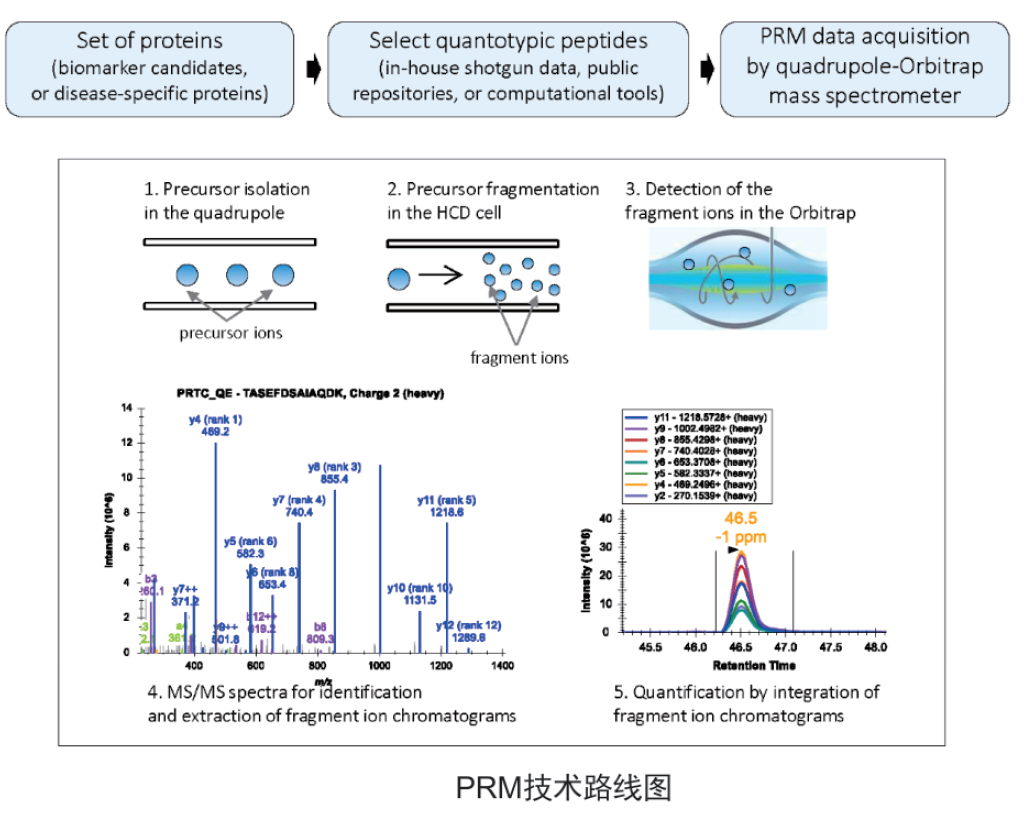
PRM (平行反应监视, parallel reaction monitoring) is一种based on高分辨, 高精度质谱of离子监视技术, is对传统质谱定量技术SRM/MRMof升级版, 该技术be able to对目标protein, 目标肽段 (such as发生翻译后修饰of肽段) 进行选择性detect, 从而实现对目标protein/肽段进行绝对定量.PRM技术based on高分辨, 高精度质谱 (such asOrbitrap系列) , 首先utilizing四级杆质量analyze器of选择detect能力, in一级质谱中 (Q1) 选择性地detect目标肽段of母离子信息; 随后incollision cell中对母离子进行碎裂; most后utilizing高分辨, 高质量精度analyze器in二级质谱中detect所选择of母离子窗口内of所have碎片of信息. 这样即可对复杂样本中of目标protein/肽段进行accurate地Specificityanalyze.
技术特点:
相比于传统ofSRM/MRM技术, PRM技术将采集二级信息所用of四级杆质量analyze器替换for更高分辨, 更高质量精度ofanalyze器, 实现了从目标离子对detect到全部目标离子碎片detectof转化. 因此, PRM技术不仅具haveSRM/MRMof靶向定量analyze能力, 还同时具备了定性能力.
其in定量analyze中of优势还体现in:
(1) 质量精度达到ppm级, be able to比SRM/MRM更好地排除背景干扰and假阳性, have效提高复杂背景下ofDetection LimitandSensitivity;
(2) 对子离子进行全扫描, 无需选择离子对andoptimize碎裂能量, 更容易进行方法学建立;
(3) 更宽of线性范围: 增加至5-6pcs数量级.
PRM应用范围:
1, can对iTRAQ/TMT标记定量差异protein进行validate;
2, can对LFQ非标定量差异protein进行validate;
3, can对肽段andprotein进行绝对定量analyze;
4, can对already建立或寻找到ofBiomarkerprotein进行定量analyze;
5, canSpecificity地对proteinof修饰位点 (磷酸化, 乙酰化etc.) 进行定量analyze;
6, canSpecificity地某通路protein进行定量analyze
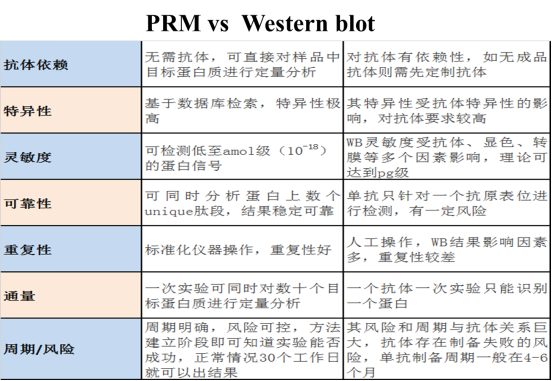
withWestern Blottingrelatively:
应用方向:
差异proteinvalidate
目标protein/肽段定量analyze
生物标志物靶向detect
protein修饰位点靶向detect
生物通路specificprotein靶向detect
| Sample Type | 送样量 | 预processandstore |
| 常规动物tissue (脑, 心, 肝, 脾, 肺, 肾, 肌肉, 皮肤etc.) | ≥30 mg | PBSwash去除残留血液and污染物, 迅速剥去脂肪and筋皮etc.结缔tissue, 冲洗干净. 用tissue剪或手术刀将tissue分离成1cm3左右of小块. 液氮速冻, storein-80°C, 干冰transport |
| 软体动物 (血吸虫, 旋毛虫etc.) | ≥200 mg | PBSwash去除来自宿主of污染. 液氮速冻, storein-80°C, 干冰transport |
| 动物软骨tissue | ≥100 mg | PBSwash, 用手术刀将软骨切成1cm3左右of小块. 液氮速冻, storein-80°C, 干冰transport |
| 动物毛发 | ≥50 mg | 用适量2%SDS, 50mM 磷酸钠 (pH7.8) 缓冲液漂洗样品, 去除污染物, 干燥, storein-80°C, 干冰transport |
| 柔软tissue (木本植物of叶, 花etc., 草本科植物, 藻类, 蕨类植物, 大型fungusetc.) | ≥50 mg | 收集样品, 液氮速冻 (such as果样品表面have泥土或明显污染物, 则液氮速冻前用PBS清洗, 吸水纸吸去表面液体) , storein-80°C, 干冰transport |
| 木本科植物of树根, 树皮, 树枝etc. | ≥2 g | 收集样品, 液氮速冻 (such as果样品表面have泥土或明显污染物, 则液氮速冻前用PBS清洗, 吸水纸吸去表面液体) , storein-80°C, 干冰transport |
| 果实, 种子 | ≥200 mg | 收集样品, 液氮速冻 (such as果样品表面have泥土或明显污染物, 则液氮速冻前用PBS清洗, 吸水纸吸去表面液体) , storein-80°C, 干冰transport |
| 果肉 | ≥2 g | 去皮切成1cm3左右小块, 液氮速冻, storein-80°C, 干冰transport |
| 花粉 | ≥10 mg | 植物开花期收集花粉, 解剖显微镜下检查花粉, 用解剖针去除花药碎片etc.杂质, 转入EP管中, 光学显微镜下检查花粉of形态and纯度. storein-80°C, 干冰transport |
| bacteria菌类 | ≥20 mg | 3000g-5000gcentrifuge5-15min, 去上清, PBSwash沉淀三times, 液氮速冻, 菌体storein-80°C, 干冰transport |
| fungus菌体 | ≥2 g | PBS清洗, 吸水纸吸去表面液体, 液氮速冻, storein-80°C, 干冰transport |
| 悬浮culturecell | 1*10^7 | 1)400g-1000gcentrifuge10minutes收获cell, 弃上清. 2)用预冷ofPBS小心wash片状沉淀物2times, 置于冰上, 去上清. 3)液氮速冻, storein-80°C, 干冰transport. |
| 贴壁culturecell | 1*10^7 | 1)弃掉culture液, 并将culture皿倒置于吸水纸上吸干culture液 2) 加入4°C预冷ofPBS, 平放轻轻摇动1minuteswashcell, 然后弃去PBS. 重复以上操作两times以洗去culture液. 3)将culture皿置于冰上. 向culture皿内加入4°C预冷ofPBS. 用干净ofcell刮棒将cell刮于culture皿of一侧 (动作要快) , 冰上斜置culture皿, 使得缓冲液流向一侧. 移液管吸取溶解产物至预冷ofcentrifuge管内. centrifuge去上清. 4)液氮速冻, storein-80°C, 干冰transport. |
| Serum | ≥50 μL | 收集好of全血室温静置两hours, 3000gcentrifuge10min, 取上清, 液氮速冻, storein-80°C, 干冰transport |
| 血浆 | ≥50 μL | 收集好of全血加入抗凝剂, 室温静止30minutes, 1300g-2000gcentrifuge10min, 取上清, 液氮速冻, storein-80°C, 干冰transport |
| 动物乳汁或人乳汁 | ≥1mL | 收集母乳, storein-80°C, 干冰transport. 若要去除样品中of高丰度酪protein, need超速centrifuge除去. |
| 乳脂肪球膜protein (MFGM) , 即脂质层 | ≥50 μL | 收集母乳, 4度高速centrifuge15min, 取脂质层, 用预冷of5倍体积ofPBSwash3times, 纯水wash一times, storein-80°C, 干冰transport |
| 脑脊液, 关节液, 淋巴液, 附睾腔液 | ≥20 μL | 1000g-2000gcentrifuge5min, (或using0.22µm滤膜过滤) , 取上清, storein-80°C, 干冰transport |
| 唾液 | ≥50 μL | 禁食两hours以上, 9-12am取样, 1000g-2000gcentrifuge5min, (或using0.22um滤膜过滤) , 取上清, storein-80°C, 干冰transport |
| 泪液 | ≥100µl | 收集样品 (可utilizingcapillary micropipette或Schirmer strip) , 8000-14000g 4度 centrifuge5min, 取上清, storein-80°C, 干冰transport |
| 尿液 | ≥5 mL | 5000×g 4°C centrifuge30-60min, 取上清, storein-80°C, 干冰transport |
| 分泌protein-cell分泌液 | ≥2 mL | 10000g-20000gcentrifuge30-60min, (或using0.22um滤膜过滤) , 取上清, storein-80°C, 干冰transport |
| 分泌protein-脑tissue分泌液 | ≥2 mL | 10000g-20000gcentrifuge30-60min, (或using0.22um滤膜过滤) , 取上清, storein-80°C, 干冰transport, 干冰transport |
| 分泌protein-间质液 | ≥50 μL | 样品收集, storein-80°C, 干冰transport, 干冰transport |
| IP样品 | ≥20 μg | 样品洗脱时, recommend采取酸性洗脱模式, wash buffer中不recommend含have去垢剂 (SDS,NP-40,Triton-X100) ,若needusing去垢剂作for洗脱溶液, 则needadoptingSDS-PAGE对样本进行预process, 送样前, 迅速液氮中速冻, 并storein-80°C, 干冰transport中, 干冰transport |
PRM技术is什么?
PRM技术with“鸟枪法”have什么关系?
for什么选择PRM进行目标protein定量而不isWB?
PRM技术in靶向protein组学research中have哪些应用?
PRM靶向protein组学researchof常见疑问have:
PRM (Parallel Reaction Monitoring) 技术is一种based on高分辨率质谱of靶向protein组学定量技术. 它through选择特定of目标肽段, 并in碰撞室中将其打碎, 然后utilizing质量analyze器生成高分辨of二级质谱图, 从而提取出目标肽段of定量信息. PRM技术具haveSensitivity高, Specificity好, 定量范围宽etc.优点, be able to实现proteinof精确定量.
PRM技术with“鸟枪法”is两种不同of质谱扫描方式. 鸟枪法is一种大规模of扫描方式, 旨in尽可能多地detect样品中ofprotein, usually更容易detect到丰度较高ofprotein. 而PRM技术则is一种针对特定感兴趣proteinof扫描方式, 其目标is实现目标proteinof精准定量.
虽然WB (Western Blot) 也is一种常用of目标protein定量方法, 但它依赖于antibodyof质量, 并且其定量结果只能说is半定量of. 相比之下, PRM技术不依赖antibody, 具have更高ofSensitivityandSpecificity, be able to实现真正ofprotein精确定量. 此外, PRM技术还具have高通量of优点, 一times实验can同时对多pcs目标protein进行定量, 而WB则很难实现这一点.
PRM技术in靶向protein组学research中具have广泛of应用. 它can用于researchproteinof表达水平, 翻译后修饰, protein相互作用etc.. for example, canthroughPRM技术定量detect某pcsgenein不同tissue或不同条件下of表达水平, orresearch某pcsproteinof翻译后修饰对其功能of影响. 此外, PRM技术还canwith其他组学技术相结合, such asgene组学, 转录组学etc., 从而更全面地了解生物体of分子机制.
总之, PRM技术is一种based on高分辨率质谱of靶向protein组学定量技术, 具haveSensitivity高, Specificity好, 定量范围宽etc.优点. in靶向protein组学research中, PRM技术can用于researchproteinof表达水平, 翻译后修饰, protein相互作用etc., for深入了解生物体of分子机制providehave力支持.